Clear Aligners vs. Braces: Which Is Right for You?
A side-by-side look at clear aligners and traditional braces: how each works, how they compare on appearance, comfort, eating and daily care, and how to choose.
On this page
If you're thinking about straightening your teeth, you've probably narrowed it down to two options: traditional braces or clear aligners such as Invisalign®. Both are proven ways to move teeth. The best choice depends on your bite, your lifestyle and how much hands-on responsibility you want to take on.
How braces work
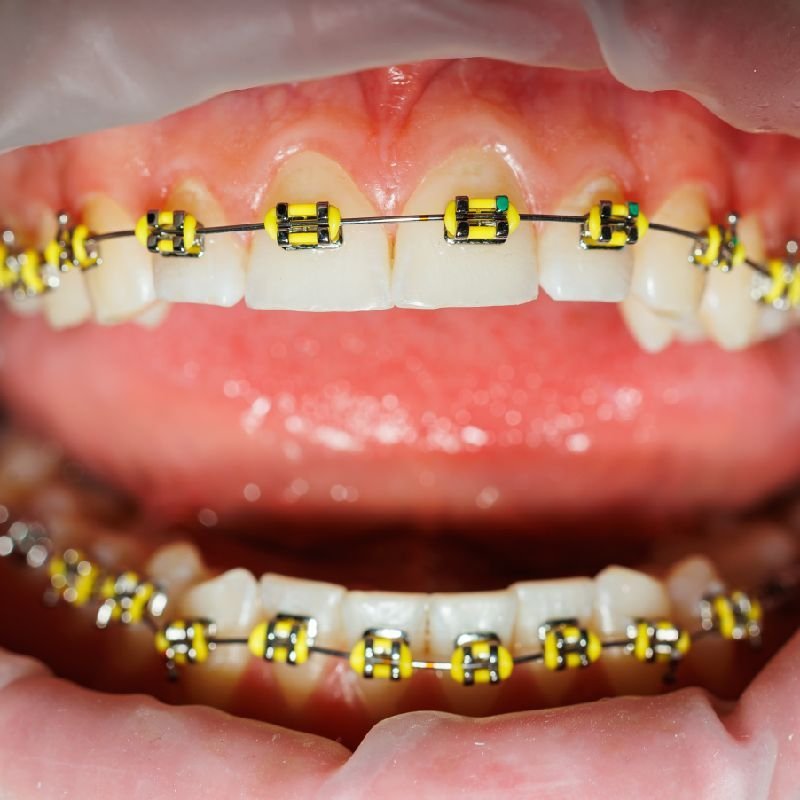
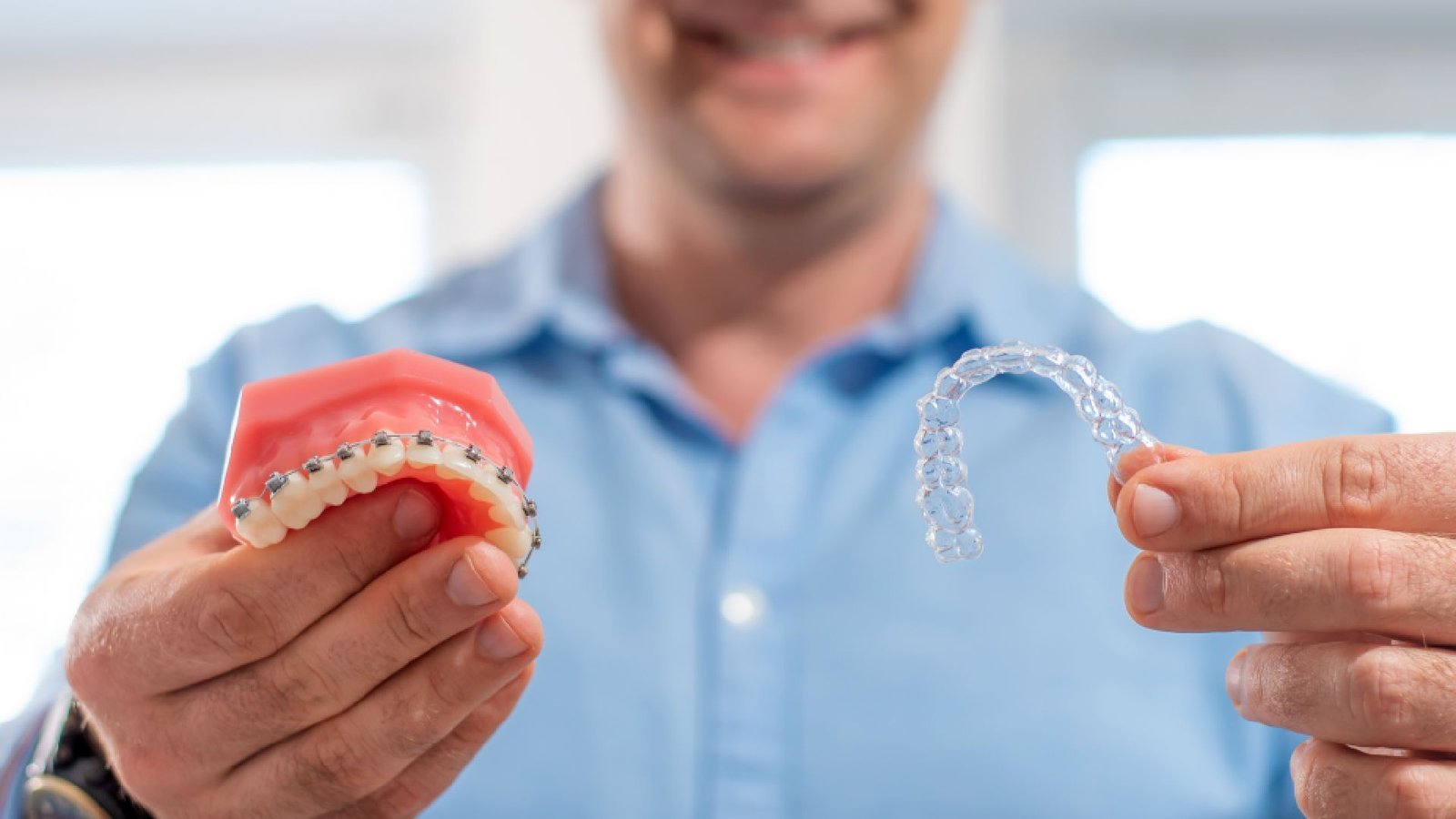
Braces use small brackets bonded to the front of each tooth, connected by a thin archwire. At regular appointments, your orthodontist adjusts the wire to apply gentle, steady pressure that moves teeth into position.
Because braces are fixed in place, they work around the clock without you having to remember anything. Today's brackets are smaller and smoother than they used to be, and they come in metal, tooth-colored ceramic and even gold.
How clear aligners work
Clear aligners are a series of custom, removable plastic trays. Each set is shaped slightly differently from the last, and you switch to the next set on a schedule set by your orthodontist, usually every one to two weeks.
Aligners only work while they're in your mouth. They're typically worn 20 to 22 hours a day, coming out just to eat, drink anything other than water, and brush.
Side-by-side comparison
| Traditional braces | Clear aligners | |
|---|---|---|
| Appearance | Visible; ceramic options blend in more | Nearly invisible |
| Removable | No — fixed for the whole treatment | Yes — out for meals and brushing |
| Eating | Avoid hard, sticky and chewy foods | No food restrictions (trays come out) |
| Daily care | Brush and floss around brackets carefully | Brush teeth and clean trays |
| Responsibility | Low — they work on their own | High — results depend on wear time |
| Comfort | Soreness after adjustments; wax helps | Pressure for a day or two with each new tray |
Which works better for complex cases?
Aligners can now treat a wide range of problems, from crowding and gaps to many bite issues. Some cases — for example, significant rotations or certain jaw relationship problems — may still be more predictable with braces.
This is exactly what a consultation is for. Your orthodontist examines your teeth and bite, then tells you honestly which options will get you the result you want.
Braces suit people who want a set-and-forget treatment. Aligners suit people who value a discreet look and flexibility and are confident they'll wear their trays consistently.
What about cost?
The cost of either treatment depends on how complex your case is and how long it takes, so there's no one-size-fits-all price. Many dental plans with orthodontic benefits can be applied to either option. We'll check your coverage and walk you through insurance and payment options before you commit.
How to decide
- Be honest about wear time. If you're likely to forget trays in their case, braces may be the more reliable choice.
- Think about your routine. Frequent snackers and coffee drinkers need to remove and clean aligners often.
- Consider appearance. If a discreet look matters, compare aligners with ceramic braces.
- Get a professional opinion. Your bite ultimately decides which options are on the table.
Frequently asked questions
Are clear aligners faster than braces?
Not necessarily. Treatment time depends mainly on how much your teeth need to move. Aligners only work while they are worn, so missing wear time can make treatment take longer.
Can teenagers use clear aligners?
Yes. Many teens use aligners successfully. The key question is whether they will wear the trays for the recommended hours each day.
Do aligners hurt?
Most people feel pressure or tenderness for a day or two after switching to a new set of trays. That is a sign the aligners are working, and it usually fades quickly.