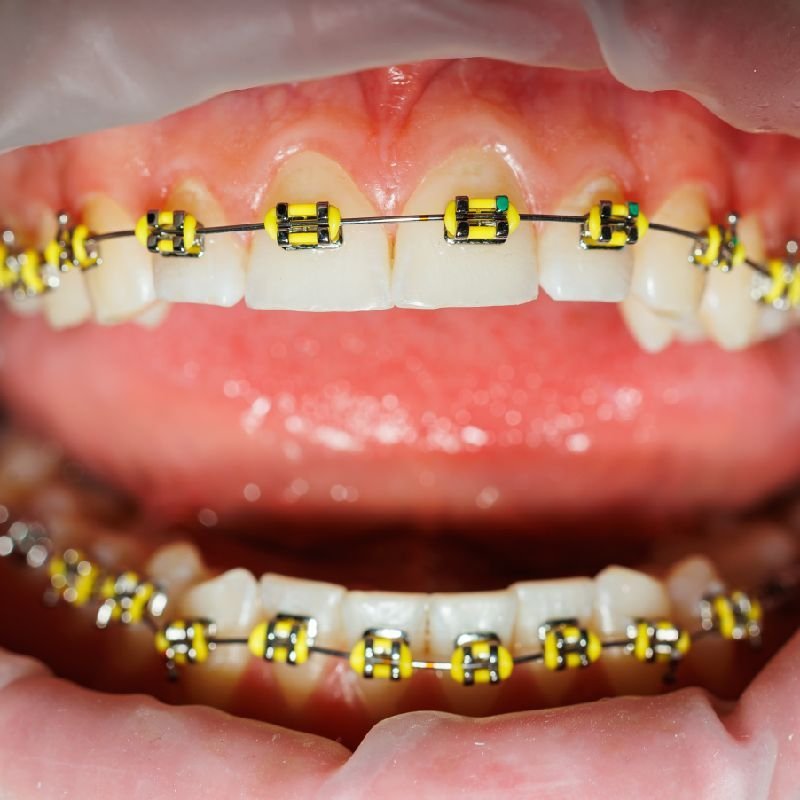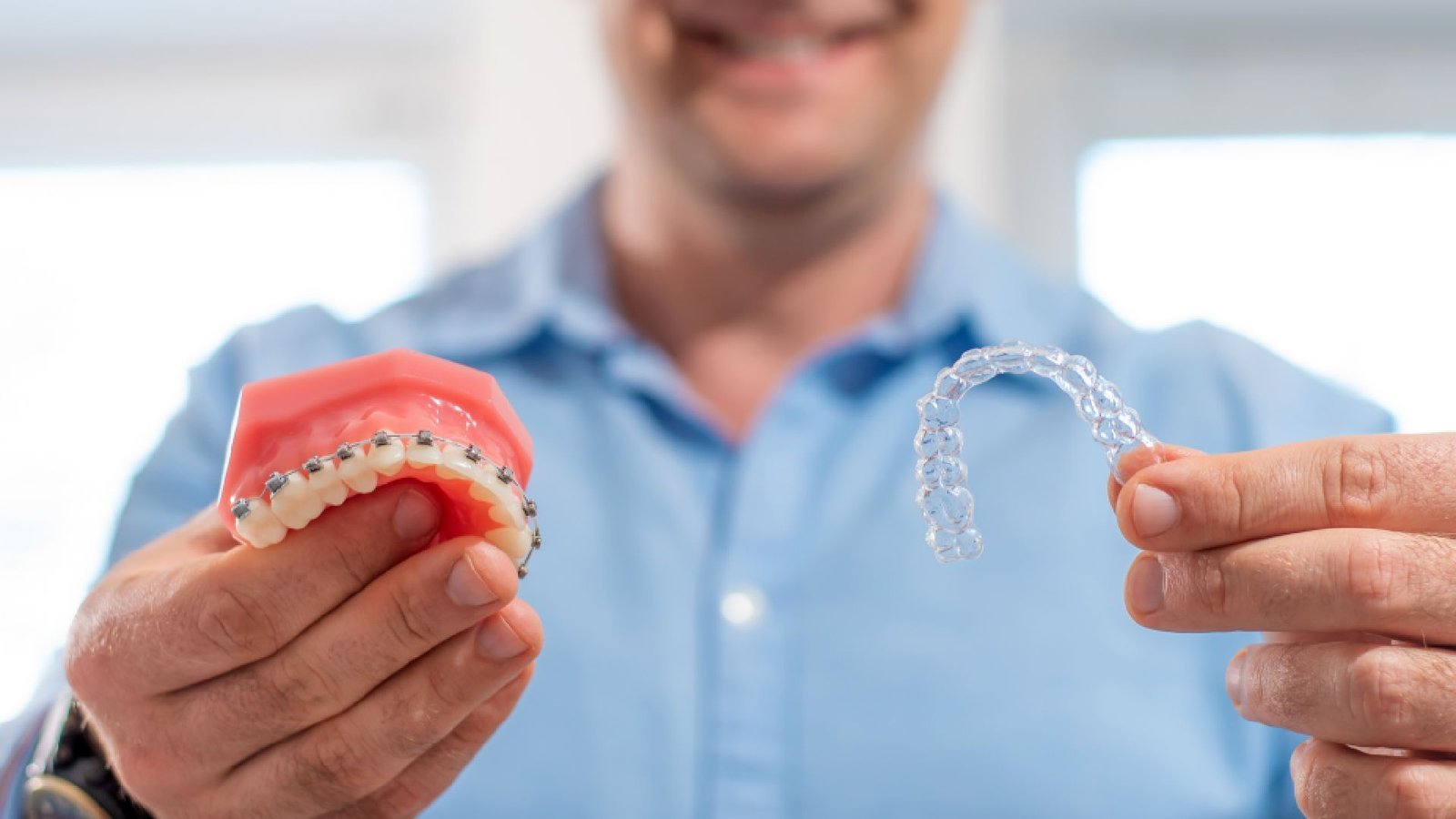
How to Care for Your Braces: Cleaning, Food and Comfort Tips
A practical guide to life with braces: how to brush and floss around brackets, which foods to avoid, how to handle soreness, and what to do if something breaks.

On this page
Getting braces is exciting — and it comes with a few new habits. Looking after your teeth and brackets keeps treatment on schedule, protects your enamel and means a healthier, brighter smile on the day your braces come off.
Brushing with braces
Food gets caught around brackets and wires far more easily than on bare teeth, so brushing matters more than ever.
- Brush after every meal when you can, and always before bed.
- Use a soft-bristled brush and a fluoride toothpaste.
- Angle the brush down from above the brackets, then up from below, so you clean both sides of the wire.
- Spend about two minutes, and check in a mirror that no food is left behind.
A small interdental brush (sometimes called a proxy brush) is great for reaching under the wire and between brackets.
Flossing made easier
Flossing with braces takes a little longer at first, but it quickly becomes routine.
- Floss threaders help you guide regular floss under the archwire.
- Orthodontic floss has a stiff end that slides under the wire without a threader.
- Water flossers are a helpful extra for flushing out food, but they work best alongside regular floss rather than instead of it.
Foods to avoid
Most meals are still on the menu. The foods to skip are the ones that can bend wires, loosen brackets or get stuck:
| Type | Examples |
|---|---|
| Hard | Nuts, hard candy, ice, hard pretzels |
| Sticky | Caramel, taffy, gummy candy, chewing gum |
| Chewy | Bagels, hard rolls, jerky |
| Crunchy | Popcorn, chips, hard taco shells |
| Bite-into | Whole apples, carrots, corn on the cob (cut them up instead) |
If it's hard, sticky or needs a big bite, cut it into small pieces or save it for after treatment.
Handling soreness
It's normal for teeth to feel tender for a few days after braces go on and after adjustments.
- Stick to soft foods like pasta, yogurt, eggs, soup and smoothies for a day or two.
- Press a small piece of orthodontic wax over any bracket that rubs your cheek or lip.
- Rinsing with warm salt water can soothe irritated spots.
- An over-the-counter pain reliever can help — follow the label directions.
If a bracket or wire comes loose
Minor problems happen and are rarely an emergency. If a bracket loosens or a wire starts to poke, cover the sharp spot with orthodontic wax and call your Ignite Orthodontics office. Don't try to cut or bend wires yourself — we'll fix it properly and keep your treatment on track.
Sports and activities
You can keep playing sports and musical instruments with braces. For contact sports, wear an orthodontic mouthguard to protect your teeth, lips and cheeks.
Keep up with appointments
Regular adjustment visits, usually every four to eight weeks, keep your teeth moving as planned. Keep seeing your general dentist for cleanings during treatment too.
Frequently asked questions
Can I chew gum with braces?
It is best to avoid chewing gum. It sticks to brackets and wires, is hard to clean off, and can pull on your appliances.
Can I whiten my teeth while wearing braces?
Wait until your braces come off. Whitening during treatment can leave lighter and darker patches where the brackets were attached.
How often will I need adjustments?
Most patients visit every four to eight weeks. Your orthodontist will set a schedule based on your treatment plan.